
If you are looking into moving to Charleston SC and find yourself drawn to the suburbs east of the Cooper River, you aren’t alone. Mount Pleasant has evolved from a sleepy fishing village into one of the most sought-after addresses in the Southeast. For many, it represents the ideal blend of coastal relaxation and suburban convenience.
However, deciding if the area is the right fit for your household involves weighing some significant pros against a few stark realities. The primary draws are undeniable: access to top-tier education, consistently low crime rates, and proximity to the beach. But as we head further into 2026, those benefits come with a premium price tag.
Housing costs here have climbed significantly. As of early 2026, median home listing prices often hover between $850K and $900K. While the town offers a high quality of life, it is essential to understand the daily logistics, financial requirements, and infrastructure growing pains.
Education: Public and Private School Options
For many households, the search for a new home starts and ends with the school zone. Mount Pleasant falls under the Charleston County School District (CCSD), and the schools here are frequently cited as a primary driver for relocation.
The area is known for high academic performance compared to the rest of the state. Proficiency rates in math and reading within Mount Pleasant schools typically range between 76% and 80%, substantially outpacing the state averages which often sit closer to 40% or 50%. This academic rigor is visible at the high school level, where residents are generally zoned for either Wando High School or the newer Lucy Beckham High School.
Wando is a massive campus known for an incredibly diverse curriculum, offering everything from advanced AP courses to specialized career and technical education. Lucy Beckham High, which opened more recently, offers modern facilities and has quickly established a reputation for excellence, consistently earning “Excellent” ratings on state report cards.
For younger students, elementary schools like Belle Hall and Mount Pleasant Academy are highly regarded staples of the community. If you prefer an alternative to the public system, there are several private institutions nearby, though many residents find the public options robust enough to make private tuition unnecessary.
Safety and Crime Statistics in 2026
When relocating, feeling secure in your new environment is non-negotiable. Mount Pleasant consistently ranks as one of the safer municipalities in South Carolina, a factor that heavily influences property values here.
According to recent data, the violent crime rate in Mount Pleasant is approximately 45% below the national average. Incidents are rare and usually isolated. Property crime is also low, sitting about 46% below the national average. While no town is immune to petty theft, the statistical likelihood of being a victim here is roughly 1 in 77, which is significantly lower than many urban centers or other rapidly growing suburbs.
The perception of safety is further enhanced by the design of local neighborhoods. Many residents live in master-planned communities with active Homeowners Associations (HOAs) and neighborhood watch programs, which tends to limit through-traffic and increase community vigilance.
Top Residential Communities with Amenities
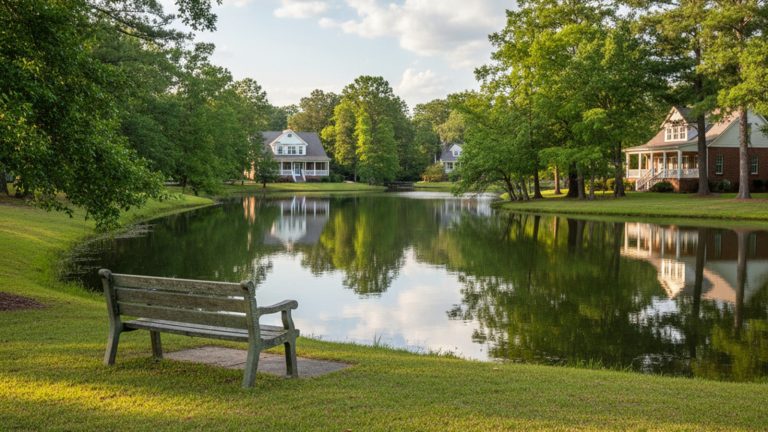
Mount Pleasant isn’t just a grid of streets; it’s a collection of distinct neighborhoods, each with its own “personality” and price point. When looking for best neighborhoods in Mount Pleasant, you will find that amenities are a major focus of development.
- Old Village: This is the historic heart of town. It offers immense charm and walkability to the water, but it commands the highest price per square foot in the area.
- Carolina Park & Park West: These are massive master-planned developments located further north up Highway 17. They are designed to be self-contained ecosystems with extensive walking trails, multiple pools, tennis courts, and schools often located directly within the development boundaries.
- Dunes West: If you are looking for a gated environment with a focus on golf and tennis, this is a top contender. The lots here tend to be larger, offering more privacy between neighbors.
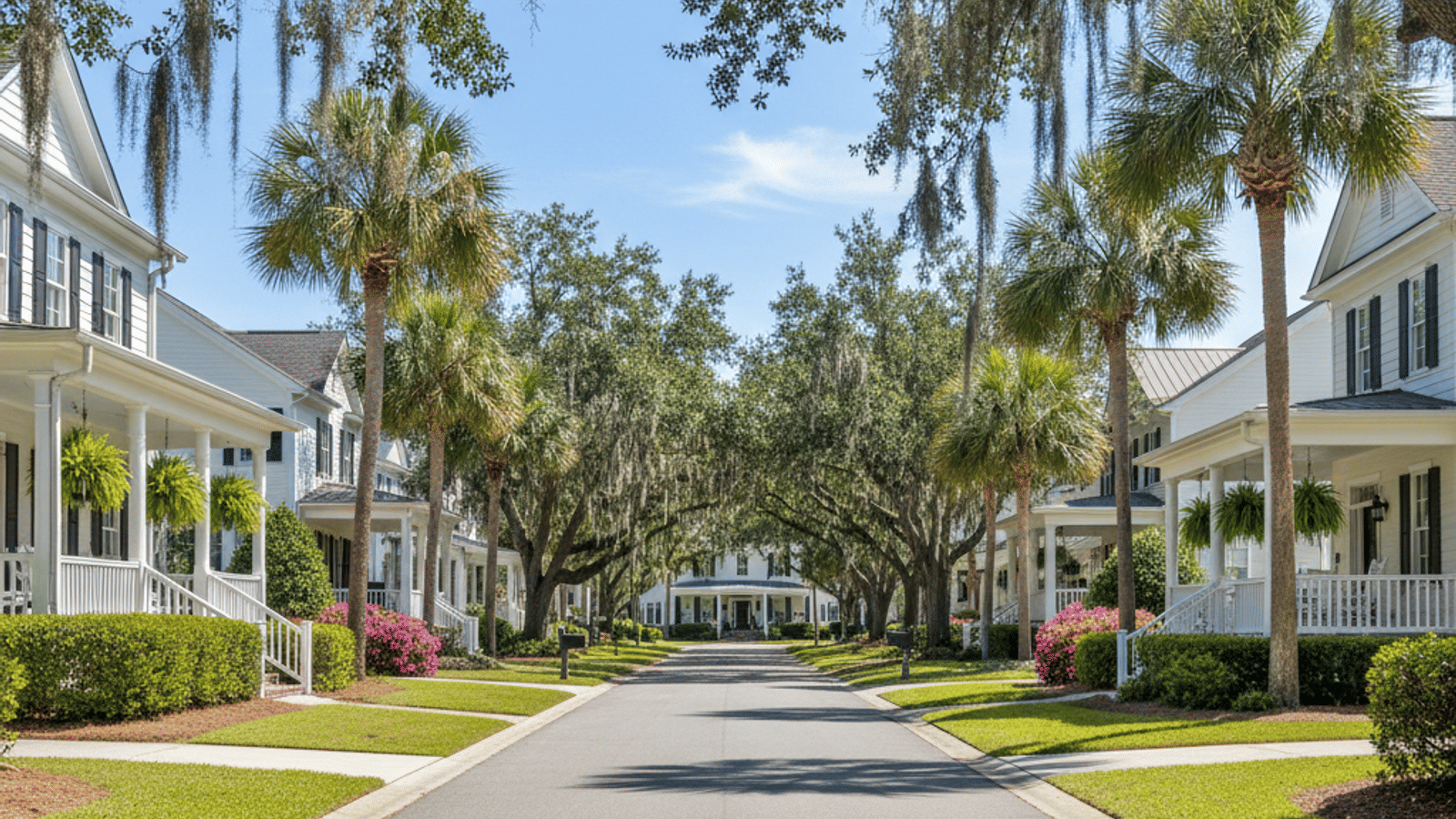
- I’On: Known for its “neotraditional” design, I’On features high-density, architecturally distinct homes with deep front porches. It is incredibly walkable and focused on community interaction, though lot sizes are smaller.
Parks, Beaches, and Weekend Recreation
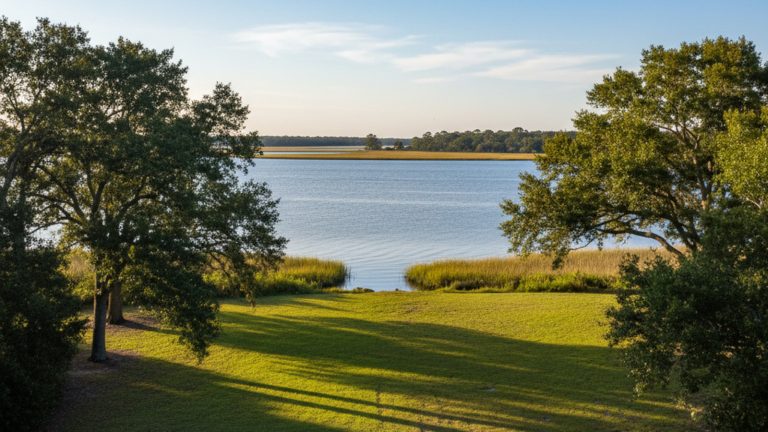
One of the biggest lifestyle perks here is that you don’t have to plan a vacation to enjoy the outdoors. The town is geographically positioned between the Wando River and the Atlantic Ocean, making water activities a standard part of the weekend routine.
For beach access, you are ideally situated. Both Isle of Palms (IOP) and Sullivan’s Island are just a 10 to 15-minute drive from most parts of town. Whether it’s a morning walk on the sand or a full beach day, the proximity is a major lifestyle upgrade.
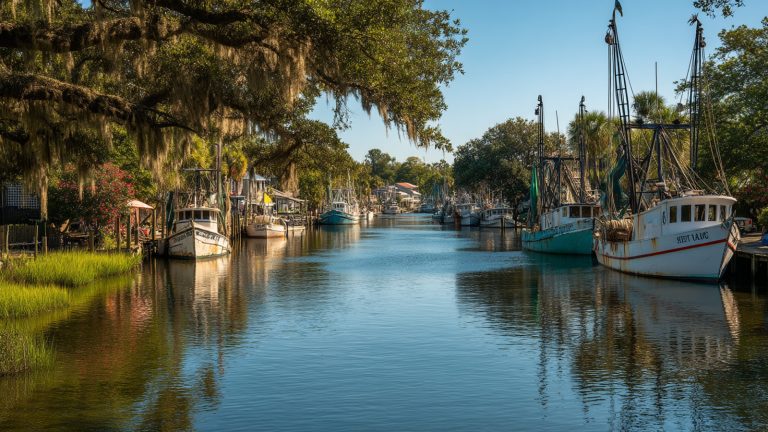
If you prefer green space over sand, the local park system is extensive. Palmetto Islands County Park is a local favorite for its nature trails, crabbing dock, and observation tower. Closer to the bridge, the Mount Pleasant Memorial Waterfront Park offers a large pier and ample playground space with views of the harbor. For those who love being on the water, Shem Creek is the hub for kayaking, paddleboarding, and watching the shrimp boats come in.
Cost of Living and Housing Market Reality
We need to have a candid conversation about the financials. While the cost of living in South Carolina is generally lower than in the Northeast or West Coast, Mount Pleasant is an outlier. It is expensive, and housing is the single biggest line item in the budget.
As mentioned earlier, median sales prices are hovering between $850K and $900K this year. The barrier to entry for a detached single-family home in a desirable school zone is high. Inventory remains competitive, with prices showing slight year-over-year increases of roughly 0.8% to 4.5%.
Beyond the mortgage, you need to budget for specific local costs:
- HOA Fees: Almost all major neighborhoods have them, ranging from modest annual fees to significant monthly dues in gated communities with golf courses.
- Flood Insurance: Because we are in the Lowcountry, flood insurance is mandatory in many zones and recommended everywhere. This can add thousands to your annual carrying costs.
- Daily Living: Grocery and utility costs are generally in line with national averages, but the lifestyle creep—dining out, boat storage, club memberships—can add up quickly.
Traffic and Commuting to Charleston
If there is one universal complaint among locals, it is the traffic. Mount Pleasant is geographically constrained, and Highway 17 is the primary artery running through the entire town. During peak hours, it can get heavily congested.
The Arthur Ravenel Jr. Bridge is your main connector to downtown Charleston. While it flows relatively well, backups are common during rush hour. It is also worth noting that school drop-off and pick-up times can increase traffic volume on local roads by 15% to 25%.
While CARTA provides some public transit options, the reality is that Mount Pleasant is a car-dependent community. Most daily errands, from grocery runs to soccer practice, will require a vehicle. If you are commuting to downtown Charleston or North Charleston for work, you will want to test drive that route during rush hour before signing a contract.
Summary: Pros and Cons of Living in Mount Pleasant
Here is a quick snapshot of the trade-offs you are making when you choose this zip code.
Pros:
- Access to some of the highest-rated public schools in the state.
- Very low crime rates and a strong sense of community safety.
- High property value retention and strong resale demand.
- Immediate access to beaches, waterways, and outdoor recreation.
Cons:
- High cost of living and a high barrier to entry for housing.
- Significant traffic congestion, particularly on Highway 17.
- Risk of hurricanes and flooding (and the associated insurance costs).
- High humidity and bugs during the summer months.
Final Verdict
So, is Mount Pleasant the right spot for you? If your household budget can sustain the premium housing costs, the town delivers on its promises. It offers a safe, academically rigorous, and activity-rich environment that is hard to match elsewhere in the region.
However, if the budget is tight, the financial stress of the mortgage and insurance might outweigh the benefits of the zip code. For many newcomers, the best move is to rent for six months. This gives you time to experience the morning commute, explore the different neighborhoods, and decide if the lifestyle justifies the price tag.
Frequently Asked Questions
Is Mount Pleasant SC safe?
Yes, Mount Pleasant is statistically very safe. Violent crime rates are approximately 45% below the national average, and property crime is about 46% lower than the national average. While petty crime can happen anywhere, the overall risk is significantly lower here than in many other similarly sized communities.
What are the best schools in Mount Pleasant?
The area is served by the Charleston County School District, with Wando High School and Lucy Beckham High School being the two primary high schools, both rated “Excellent.” For elementary education, schools like Belle Hall and Mount Pleasant Academy are consistently highly regarded by parents for their academic proficiency and community involvement.
How far is Mount Pleasant from the beach?
One of the biggest perks of living here is the proximity to the coast. Depending on where you live in town, you are typically only a 10 to 15-minute drive from the beaches at Isle of Palms or Sullivan’s Island.
Is Mount Pleasant expensive to live in?
Yes, compared to the rest of South Carolina, the cost of living is high, primarily driven by real estate values. With median home prices often sitting between $850K and $900K in 2026, housing costs are the most significant financial