
If you are looking to move to the Lowcountry, you have likely narrowed your search down to two heavy hitters: the historic, energetic peninsula of Charleston and its sophisticated, slightly more sprawling neighbor across the river, moving to Mount Pleasant.
While they are separated only by the Cooper River and connected by the iconic Arthur Ravenel Jr. Bridge, these two areas offer vastly different day-to-day experiences. Choosing between living in Charleston SC and moving to Mount Pleasant usually comes down to a single question: Do you want the walkability and historic charm of an urban center, or the space, amenities, and ease of a modern coastal suburb?
It is worth noting that while “Charleston” technically encompasses areas like West Ashley, James Island, and Daniel Island, when locals compare “Mount Pleasant vs. Charleston,” they are almost always weighing the lifestyle of Historic Downtown against the lifestyle of Mount Pleasant.
Lifestyle & Vibe: Historic Charm vs. Coastal Modern
Let’s talk about how these two areas feel on a Tuesday morning or a Friday night.
Downtown Charleston is the heartbeat of the region. It is walkable, architectural, and buzzing with energy. Living here means your morning coffee run might take you past 18th-century row homes and cobblestone alleys. However, that charm comes with a side of noise and tourism. It is an eclectic, dense environment where you are constantly surrounded by world-class history and nightlife.
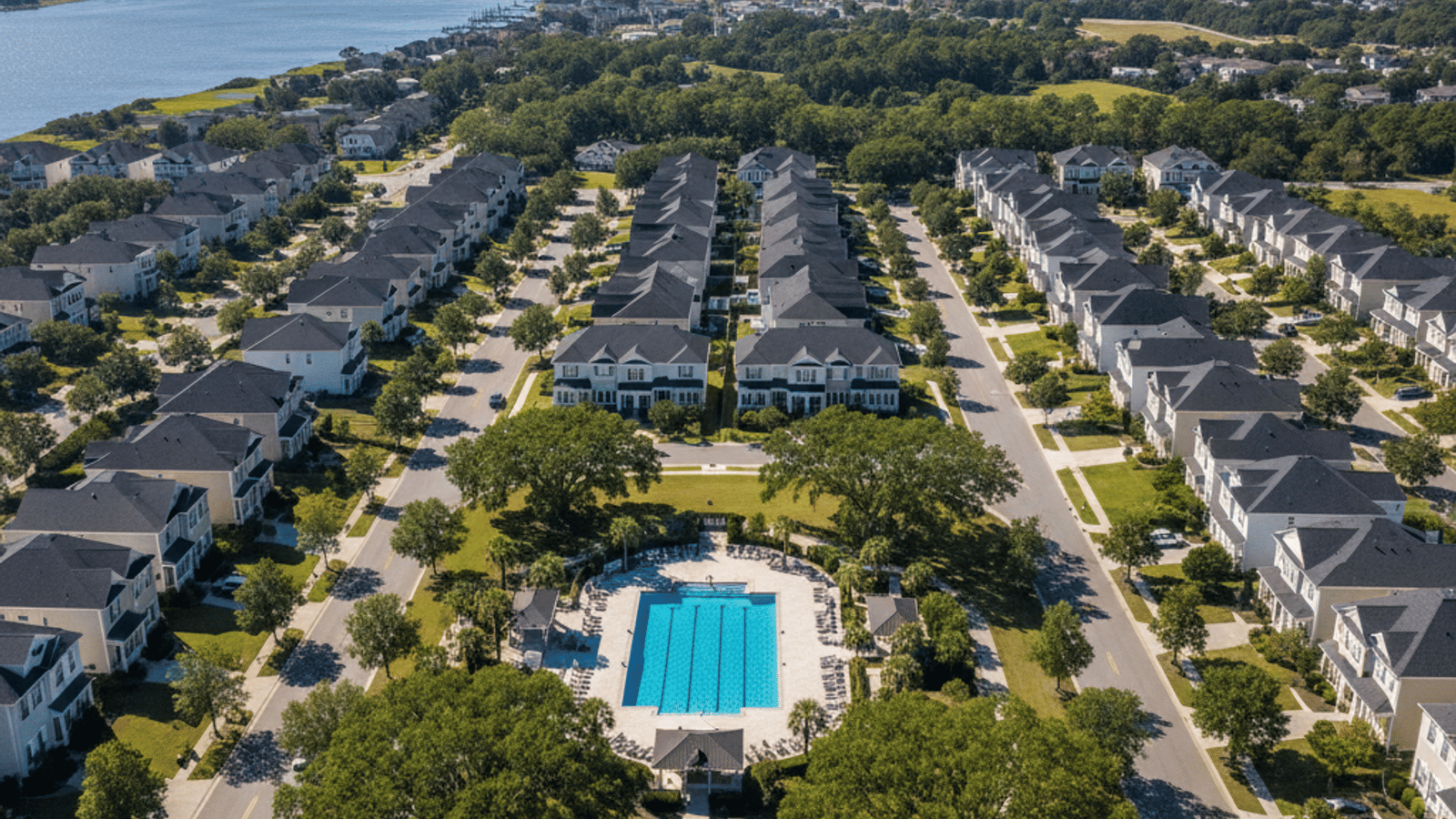
On the other side of the bridge, Mount Pleasant offers a “manicured” coastal lifestyle. It feels significantly cleaner and quieter. The town is defined by master-planned communities—places like I’On or Carolina Park—where the lawns are perfect, and the streets are wide. While Downtown Charleston has a gritty, authentic historic feel, Mount Pleasant feels more like a polished, modern resort town. It has a strong community focus with a “small town” atmosphere, despite being the fourth largest municipality in South Carolina.
Real Estate & Housing Options
The housing stock is perhaps the starkest difference between the two markets.
In Downtown Charleston, you are largely paying for history and location. Inventory here consists of historic “Charleston Singles,” renovated row homes, and luxury condos. Because the peninsula is built out, new construction Charleston SC opportunities are scarce and highly regulated. If you buy here, you should be prepared for the quirks of old homes—sloping floors, strict preservation rules for exterior renovations, and higher maintenance costs.
Mount Pleasant, conversely, is where you go for space and newer builds. You will find plenty of homes for sale in Mount Pleasant that feature open floor plans, two-car garages, and modern energy efficiency.
A major differentiator here is the Homeowners Association (HOA). In Downtown Charleston (outside of condos), HOAs are rare. You have more freedom, but you generally won’t have access to a neighborhood pool or tennis courts. in Mount Pleasant, HOAs are the standard. Almost every subdivision provides amenities like pools, clubhouses, and docks, though this comes with covenants and restrictions you’ll need to follow.
Price-wise, both are premium markets. You can expect median list prices for detached homes in both areas to hover in the $900,000 to $1,000,000+ range, though the price per square foot is typically much higher on the Charleston peninsula.
Cost of Living: Prices, Taxes, and Hidden Fees
When budgeting for the Lowcountry, you have to look beyond the mortgage principal and interest. The cost of living here has a few layers that catch relocation buyers off guard.
Housing is the biggest line item for both, and both are significantly more expensive than the South Carolina average. Property taxes are determined by Charleston County for both locations. If you live in the home as your primary residence, you qualify for the 4% assessment ratio. If it is a second home or investment property, that jumps to 6%, which can drastically change your monthly payment.
The true wildcard is flood insurance. This is where Mount Pleasant often wins on the spreadsheet. Much of Downtown Charleston is at a lower elevation with older drainage infrastructure, meaning flood insurance premiums can be substantial. Mount Pleasant has newer infrastructure and more natural elevation. Many homes there are in “X” flood zones, where flood insurance is not federally required and premiums are much lower (often around $500–$600 a year versus thousands downtown), though waterfront properties will still carry high premiums.
Day-to-day expenses are comparable regarding groceries and utilities, but the “lifestyle tax” of dining and parking Downtown can add up quickly compared to the suburban ease of Mount Pleasant.
Education and Schools
For many households, the search for Mount Pleasant real estate listings begins and ends with school zones.
Mount Pleasant is widely recognized for having some of the highest-rated public schools in the state. High schools like Wando and the newer Lucy Beckham High School are major draws for buyers who prioritize public education, often driving demand in the surrounding neighborhoods.
The landscape in Downtown Charleston is more variable. While there are incredible educational opportunities, such as the competitive Buist Academy or Academic Magnet High School, enrollment often involves application processes or lotteries rather than simple neighborhood zoning. Both areas also offer easy access to prestigious private institutions if that is your preference.
Commute, Traffic, and Getting Around
The Arthur Ravenel Jr. Bridge is the lifeline connecting these two worlds. It is beautiful, but it dictates the commute.
If you work Downtown but live in Mount Pleasant, your commute is typically 15 to 25 minutes. However, during rush hour (7:00–9:00 AM and 4:00–6:00 PM), the bridge can get congested. Traffic within Mount Pleasant itself—specifically on Highway 17 and Rifle Range Road—can also be heavy due to the town’s rapid growth.
The trade-off is parking. In Mount Pleasant, parking is plentiful and free almost everywhere. In Downtown Charleston, owning a car can be a hassle. Many historic homes do not have driveways, forcing residents to rely on on-street parking permits or paid garages.
If you prefer a car-free lifestyle, Downtown is a 10/10 for walkability. Mount Pleasant is largely car-dependent, though specific pockets like the Old Village or near Shem Creek offer some walkability.
Dining, Shopping, and Recreation
No matter which side of the river you choose, you aren’t going to be bored or hungry.
Charleston is the undisputed culinary capital. If you want James Beard award-winning chefs, high-end cocktail lounges, and boutique shopping along King Street, the peninsula is the place to be. It offers a level of cultural density—theaters, museums, galleries—that the suburbs just can’t match.
Mount Pleasant holds its own with a more relaxed vibe. The dining scene has exploded in recent years, centered around areas like Shem Creek, where you can watch the shrimp boats come in while eating fresh seafood. For shopping, the Mount Pleasant Towne Center offers an open-air mix of big-box retailers, chains, and local boutiques.
One big point for Mount Pleasant: Beaches. It is the gateway to Isle of Palms and Sullivan’s Island. If you live in Mount Pleasant, you are a 10 to 15-minute drive from having your toes in the sand. From Downtown, getting to the beach requires crossing a bridge and fighting a bit more traffic.
Pros and Cons Summary
Here is a quick breakdown to help you visualize the trade-offs.
Charleston (Downtown) Pros:
- Unmatched historic character and architectural beauty.
- Highly walkable; you can live without a car.
- Access to world-class fine dining and nightlife.
- Strong investment potential in a globally recognized city.
Charleston (Downtown) Cons:
- Parking is difficult and often expensive.
- Higher maintenance costs for historic structures.
- Higher risk of flooding and higher insurance premiums.
- Tourist crowds and noise.
Mount Pleasant Pros:
- Newer homes with modern floor plans and closets.
- Access to top-tier public schools.
- Quick, easy access to Sullivan’s Island and Isle of Palms beaches.
- Plentiful parking and modern amenities (pools, tennis).
Mount Pleasant Cons:
- Traffic congestion on main arteries like Hwy 17.
- Higher price point than other Charleston suburbs (like Summerville).
- Lacks the “gritty” authentic edge of the city; can feel somewhat uniform.
Frequently Asked Questions
Is it cheaper to live in Mount Pleasant or Charleston?
It depends on where in Charleston you look. Downtown Charleston is generally the most expensive market per square foot. Mount Pleasant is also a premium market with high home prices, but you typically get more square footage and lower insurance costs than Downtown. If you are looking for more affordability, you might look at West Ashley or North Charleston.
How far is Mount Pleasant from Downtown Charleston?
They are very close. Just across the Ravenel Bridge, the drive typically takes 10 to 20 minutes depending on your start and end points. However, traffic on the bridge during peak rush hour can add significant time to that commute.
Does Mount Pleasant flood as much as Charleston?
Generally, no. While flooding is a fact of life in the Lowcountry, Mount Pleasant sits at a higher elevation and has newer infrastructure than the historic peninsula. Consequently, many properties in Mount Pleasant are in lower-risk flood zones compared to Downtown, though waterfront areas are still susceptible.
Which area is better for commuting?
If your office is Downtown, living Downtown is obviously the easiest commute. However, Mount Pleasant is a very manageable commute to the city, provided you time your travel across the bridge to avoid the worst of the 8 AM and 5 PM rush. If you work at Boeing or the airport, both locations offer relatively easy access via I-26 or I-526.